
Prostate Treatment in Lucknow – Dr Manmeet Singh
Prostate treatment by Dr Manmeet Singh at Medanta Hospital Lucknow.
Written for the practice of Dr Manmeet Singh — M.Ch (Urology & Renal Transplant), SGPGIMS; Director, Department of Urology, Robotics & Kidney Transplant, Medanta Hospital, Lucknow. This page is for patient education and is not a substitute for an individual consultation.
Enlarged Prostate (BPH) Treatment in Lucknow
An enlarging prostate is one of the most common reasons men over 50 see a urologist — and one of the most treatable. The difficulty is rarely whether something can be done; it is choosing the right treatment for a particular man, because the options range from simple reassurance and tablets to several very different operations. This page explains how benign prostatic enlargement is assessed and treated, so you can have an informed conversation about your own situation. Dr Manmeet Singh, an experienced prostate specialist in Lucknow, leads this evaluation at Medanta Hospital.
What an enlarged prostate actually is
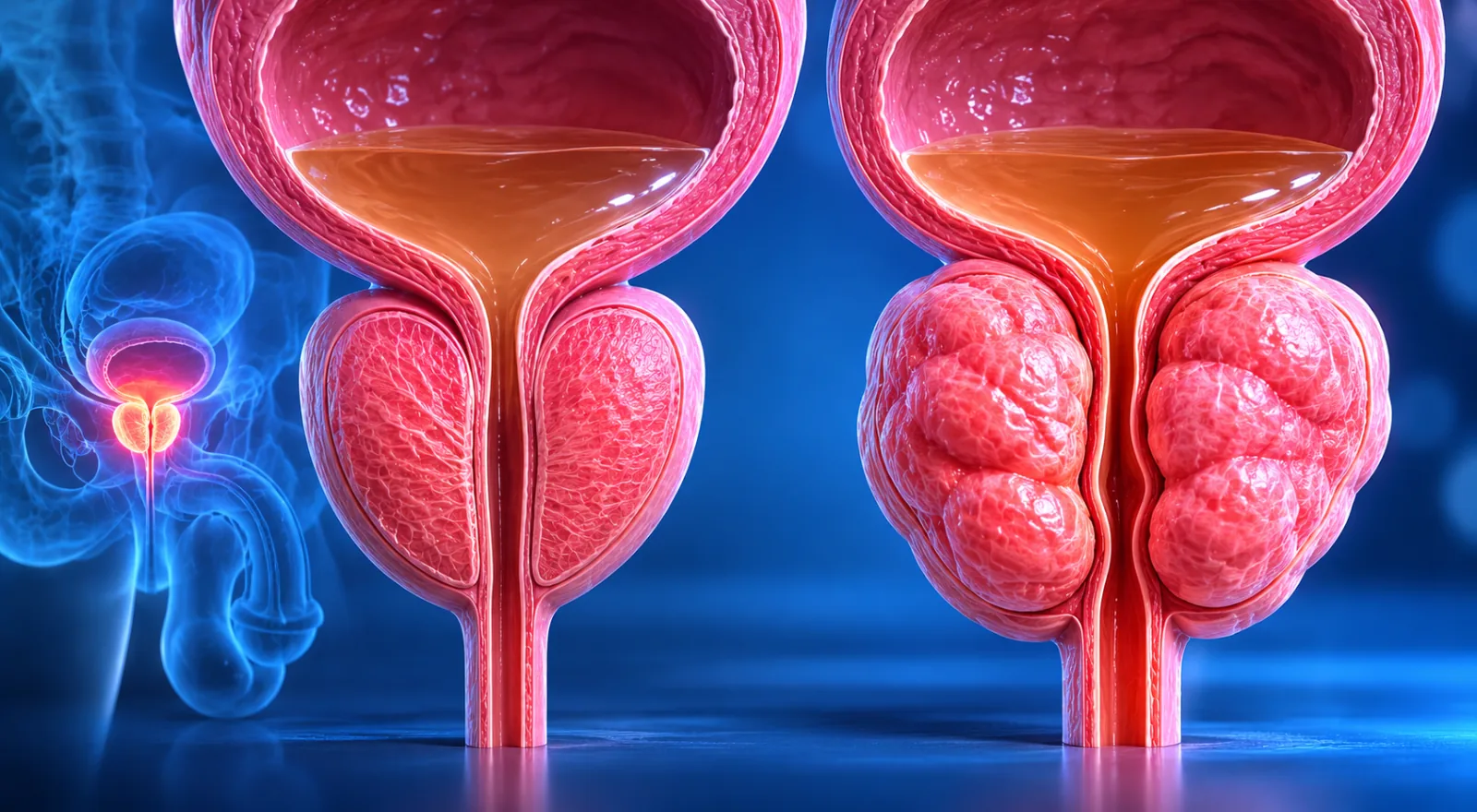
The prostate is a walnut-sized gland that sits below the bladder and surrounds the urethra — the tube urine passes through. From around the age of 40 it tends to grow slowly under normal hormonal influence. This non-cancerous growth is called benign prostatic hyperplasia (BPH). As the gland enlarges it can squeeze the urethra and obstruct the flow of urine, and the bladder muscle has to work harder to push urine past the blockage. Over time the bladder itself can become overactive, then weakened.
BPH is not prostate cancer and does not turn into cancer — they are separate conditions. However, both become more common with age and can exist in the same man at the same time, which is why a proper assessment always considers both rather than assuming the symptoms are "just an old man's prostate".
The symptoms — and which ones matter most
Doctors group prostate-related urinary symptoms (often called LUTS — lower urinary tract symptoms) into two patterns, because they point towards different treatments:
- Voiding (obstructive) symptoms — a weak or slow stream, hesitancy before flow starts, straining, an intermittent stream, dribbling at the end, and a feeling that the bladder has not emptied.
- Storage (irritative) symptoms — needing to pass urine frequently, sudden urgency, and waking at night to urinate (nocturia). These are often the most bothersome day to day, and they do not always settle immediately after treating the obstruction.
How much the symptoms interfere with your sleep, work and quality of life matters more than the size of the prostate on a scan. A moderately enlarged gland causing severe symptoms usually needs more active treatment than a very large gland causing little trouble. A simple symptom score (the IPSS questionnaire) is a useful way to measure this objectively and to track whether treatment is working.
When you should see a urologist promptly
Mild symptoms can reasonably be discussed at a routine visit. Some situations, however, warrant earlier specialist assessment because untreated obstruction can damage the bladder and kidneys:
- Complete inability to pass urine (acute retention) — this is an emergency.
- Blood in the urine.
- Recurrent urinary infections, or bladder stones.
- A markedly weak stream with a sensation of never emptying, or worsening despite medication.
- An abnormal or rising PSA, or an abnormality felt on examination.
- Any deterioration in kidney function attributed to bladder outflow obstruction.
How an enlarged prostate is properly evaluated
Good treatment decisions depend on a complete assessment rather than symptoms alone. A thorough evaluation usually includes:
- History and symptom score (IPSS) — to quantify severity and bother, and to identify storage-predominant patterns.
- Digital rectal examination (DRE) — to estimate gland size and feel for any irregularity suspicious of cancer.
- PSA blood test — interpreted in context. PSA can rise with benign enlargement as well as with cancer, so the result is considered alongside age, gland size, the examination and trend over time, not in isolation.
- Uroflowmetry and post-void residual — an objective measure of how weak the stream is and how much urine is left behind after passing it.
- Ultrasound — to measure prostate size, assess the bladder and check the kidneys for any back-pressure effect.
- Urine examination, and in selected cases cystoscopy or urodynamic studies — for example when the diagnosis is unclear, there is blood in the urine, or storage symptoms dominate.
Where the PSA, examination or imaging raises any concern about prostate cancer, that is investigated separately (with MRI and, if indicated, biopsy) before planning BPH surgery. You can read more about specialist urologic cancer evaluation if that applies to you.
Treatment is matched to the man, not the scan
There is no single "best" prostate operation — the right choice depends on how severe the symptoms are, the size and shape of the gland, whether there has been retention, what other medical conditions and medications you have, and what matters to you (for example, preserving ejaculation). Treatment generally moves through the following options.
Watchful waiting and lifestyle measures
For mild symptoms that are not bothersome and where the bladder and kidneys are safe, no immediate treatment may be needed. Simple measures often help: reducing evening fluids, moderating caffeine and alcohol, treating constipation, reviewing diuretics with your physician, and double-voiding. Symptoms are then monitored and treatment escalated only if they progress.
Medication
Several classes of medicine are used, alone or in combination:
- Alpha-blockers relax the muscle at the bladder neck and prostate, improving flow within days. They are generally well tolerated; possible effects include dizziness on standing and changes to ejaculation. If cataract surgery is planned, the surgeon should be told, as some alpha-blockers affect the iris during that operation.
- 5-alpha-reductase inhibitors gradually shrink larger glands over months and reduce the long-term risk of retention and the need for surgery. They work best in genuinely enlarged prostates and lower the PSA, which must be accounted for when interpreting future tests.
- Combination therapy (an alpha-blocker plus a 5-alpha-reductase inhibitor) is often used for larger glands with more significant symptoms.
- Anticholinergic or beta-3 agonist medicines may be added when storage symptoms (urgency, frequency) dominate and obstruction has been excluded or treated.
Medication controls symptoms but does not remove the obstructing tissue; it needs to be continued, and surgery becomes appropriate when medicines are insufficient, not tolerated, or a complication develops.
When surgery is the right step
Surgery to relieve the obstruction is generally recommended for symptoms that remain troublesome despite medication, repeated retention, recurrent infections or bladder stones due to incomplete emptying, bleeding from the prostate, or kidney impairment from chronic obstruction. The aim of every procedure below is the same — to remove or open the obstructing tissue — but the techniques differ in how they do it and in their trade-offs.
- TURP (transurethral resection of the prostate) — the long-established reference procedure. Obstructing tissue is removed endoscopically through the urethra. Highly effective for small to moderate glands.
- HoLEP (holmium laser enucleation) — the entire obstructing portion is enucleated with a laser. It is largely size-independent, so it can treat very large prostates that would otherwise need open surgery, typically with little bleeding and a shorter catheter time.
- Other laser techniques — laser vaporisation/enucleation options can be particularly useful for men who must remain on blood-thinning medication, because of the low bleeding risk.
- Robotic / open simple prostatectomy — for selected very large benign glands. (Robotic radical prostatectomy is a different operation, used for prostate cancer, not BPH.)
- Minimally invasive options — for appropriately selected men, newer techniques that aim to preserve ejaculation may be discussed; suitability is individual and assessed case by case.
A detailed, balanced comparison is set out in laser prostate surgery vs TURP, and indicative costs for each option in Lucknow are explained on the prostate surgery cost page.
How the right procedure is chosen
This is where specialist judgement matters most. The main factors weighed up are:
- Prostate size — very large glands are better suited to enucleation (HoLEP) or simple prostatectomy than to standard resection.
- Blood-thinning medication and bleeding risk — laser enucleation/vaporisation is often preferred when anticoagulants cannot be stopped.
- Retention or a very weak bladder — influences both the urgency and the type of surgery, and what recovery to expect.
- Ejaculatory function — most prostate operations commonly cause retrograde ejaculation (semen passing back into the bladder); if preserving ejaculation is a priority, this should be discussed openly beforehand.
- General fitness and anaesthetic considerations.
Recovery — what to actually expect
Most modern prostate procedures involve a short hospital stay and a urinary catheter for a day or a few days while the area heals. It is normal to have some burning, urgency or a little blood in the urine for one to a few weeks as the raw surface heals — this settles. Strenuous activity, heavy lifting and long drives are usually avoided for a few weeks, and good fluid intake is encouraged. Storage symptoms (urgency, frequency) can take longer to improve than the stream, because the bladder needs time to recover from years of working against obstruction. You should seek prompt advice for heavy bleeding, inability to pass urine after the catheter is removed, fever, or significant pain.
Risks, honestly
Prostate surgery is generally safe and effective, but no procedure is risk-free. Possible issues — most uncommon and usually manageable — include bleeding, urinary infection, temporary irritative symptoms, retrograde ejaculation (common and not harmful, but important to know about), urethral narrowing over time, and, rarely, problems with urinary control. The purpose of the detailed pre-operative assessment is to choose the technique that gives you the best result with the lowest risk for your particular prostate and health.
Prostate care with Dr Manmeet Singh in Lucknow
Dr Manmeet Singh is a urologist with an M.Ch in Urology & Renal Transplant from SGPGIMS Lucknow and is Director of the Department of Urology, Robotics & Kidney Transplant at Medanta Hospital, Lucknow. Prostate assessment, PSA review and follow-up are carried out at the Valencia IVF & Kidney Care Center; medication is managed there or via online consultation; and TURP, HoLEP, laser and other prostate surgery is performed at Medanta Hospital with full anaesthetic and inpatient support. If you are comparing specialists, the choosing a prostate specialist in Lucknow page explains what to look for.
If you have urinary symptoms, a raised PSA, or have been advised prostate surgery and would like a clear second opinion, a consultation can clarify what — if anything — actually needs to be done.
Call +91 9278164041Frequently Asked Questions – Prostate Enlargement (BPH)
No. Benign prostatic hyperplasia (BPH) is non-cancerous growth and does not turn into cancer. They are separate conditions, but both become more common with age and can occur together, which is why assessment includes PSA, examination and, when indicated, further tests to check for cancer as well.
Not necessarily. Many men are managed with lifestyle measures and medication for years. Surgery is recommended mainly when symptoms remain troublesome despite medicines, or when there are complications such as retention, recurrent infection, bladder stones, bleeding or kidney effects.
There is no single best operation for everyone. TURP is the long-established reference procedure; HoLEP is largely size-independent and suits very large glands with little bleeding; laser techniques are particularly useful for men on blood thinners. The right choice depends on gland size, your medications, bladder function and priorities — it is decided after a full assessment.
Most prostate operations for BPH commonly cause retrograde ejaculation, where semen passes into the bladder rather than out — this is not harmful but can affect fertility and should be discussed beforehand. Erectile function is usually preserved with modern techniques. If ejaculation matters to you, tell your urologist, as some options aim to preserve it.
PSA can rise with benign enlargement as well as with prostate cancer. A single value is not diagnostic — it is interpreted with your age, gland size, examination and the trend over time. If there is concern, an MRI and, if needed, a biopsy are used to clarify before planning treatment.
Most men have a short hospital stay and a catheter for one to a few days. Mild burning or a little blood in the urine for one to a few weeks is normal while healing. Strenuous activity is usually avoided for a few weeks. Urgency and frequency can take longer to settle than the urinary stream, as the bladder recovers.
Often, yes. HoLEP (holmium laser enucleation) is largely size-independent and can treat very large prostates that previously required open surgery, usually with less bleeding and a shorter catheter time. Suitability is confirmed after assessing prostate size and your overall health.
Consultation, PSA review and follow-up are at the Valencia IVF & Kidney Care Center (online consultation also available); TURP, HoLEP, laser and other prostate surgery is performed at Medanta Hospital, Golf City, Lucknow, with full inpatient support.
Prostate Health Resources
What to expect at your consultation
No referral required · Second opinions welcome · Medanta Hospital, Lucknow
Consult Dr Manmeet Singh – Urologist in Lucknow
Director – Urology, Robotics & Kidney Transplant
Medanta Hospital Lucknow