
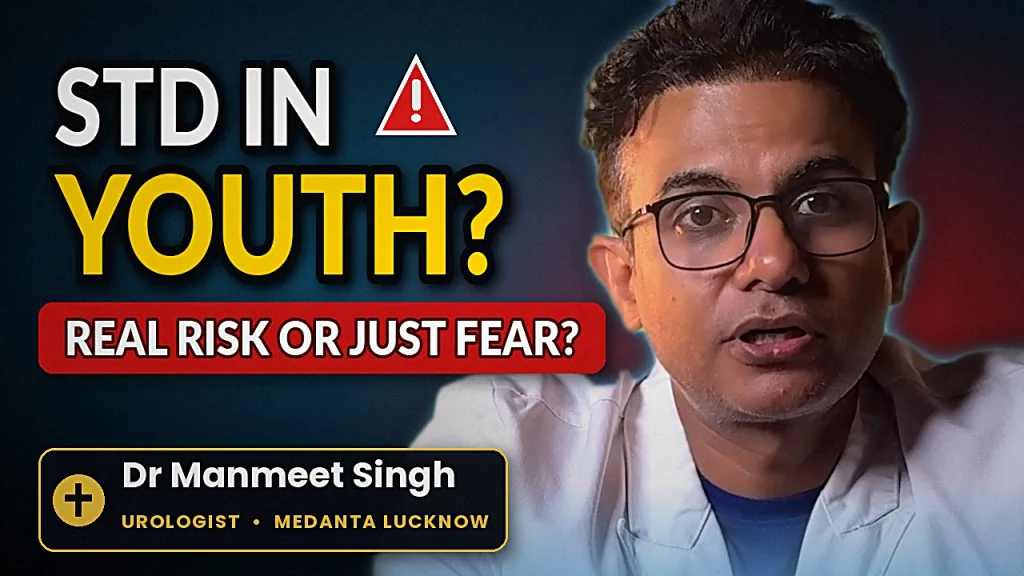
A single casual encounter. One visit to a spa. And then, months of anxiety, guilt and fear. As a urologist, this is one of the most common situations I see in young adults walking into my OPD. The fear is real, even when the disease often is not. So let us talk openly and clearly about STDs in youth: what is a genuine risk, and what is simply anxiety in disguise.
First, is it anxiety or an actual STD?
Before anything else, it is important to separate feeling from fact. Guilt and fear after an encounter are emotional responses. A sexually transmitted disease (STD) is a medical condition, and the two are not the same thing. Many young patients arrive convinced they are infected, when what they actually need is accurate information and a simple test. Both deserve attention, but only one needs antibiotics.
What exactly is an STD?
A sexually transmitted disease is an infection passed from one partner to another through sexual contact, whether oral, vaginal or anal. That is the key point most people miss: STDs are not limited to one type of contact. Any unprotected sexual exposure can transmit infection.
STD symptoms you should never ignore
STDs do not always announce themselves. In fact, they can stay silent for weeks or even months. But when symptoms do appear, watch for:
- Unusual discharge from the genital organs
- Excessive itching in the genital area
- An ulcer or sore (which may be painful, or completely painless)
- Redness or irritation
- A swollen lymph node in the groin (inguinal area)
- Swelling or pain in the testis
Any of these signs point toward a possible STD and deserve a professional check, not a guess.
But not every encounter is an STD: the "Google" trap
Here is where many young people harm themselves. Today, patients often Google their symptoms before they ever see a doctor. A little burning while passing urine, and they are convinced it is gonorrhea. A small shaving cut, and they fear herpes. Some mild weakness and weight loss, and their mind jumps straight to HIV. This spiral of self-diagnosis creates enormous stress, for the patient and their family, usually without cause. Not every symptom is an STD, and not every encounter leads to infection.
Common STDs: bacterial vs viral
Broadly, STDs fall into two groups:
Bacterial STDs
Infections such as gonorrhea and chlamydia. The good news: these can be completely cured with the right antibiotics.
Viral STDs
Infections such as herpes, HPV (which causes genital warts) and, more rarely, HIV. Viral infections usually cannot be fully cured, but with modern treatment the viral load can be suppressed so effectively that symptoms are controlled and quality of life is protected.
Knowing which type you are dealing with changes everything about the treatment plan.
Why timely diagnosis matters, for you AND your partner
A small delay or an untimely diagnosis is not a minor issue. Left unchecked, certain STDs can lead to infertility, chronic pelvic pain, and lifelong complications, for you and for your partner. This is exactly why an STD should be diagnosed early and treated properly, not ignored out of embarrassment.
The most dangerous mistake: self-treatment
The single biggest error I see is self-treatment born out of fear. Someone buys an antibiotic from the medical store on their own. Someone develops a sore and applies whatever ointment is easily available, without ever asking why the sore formed. This does not cure the problem; it masks it, delays the right diagnosis, and can make things far worse.
The good news: testing today is cheap, fast and precise
Modern diagnostics have made this easier than ever. Depending on your symptoms, an STD can be identified through:
- A simple urine sample
- A blood test
- A swab test taken from the site of discharge
- A PCR test for pinpoint, specific diagnosis
These tests are affordable and highly accurate; no diagnosis stays hidden from them. There is simply no reason to live in doubt when clarity is this accessible.
What you should actually do
If you or someone close to you is caught in this worry, please do not stay trapped in embarrassment, anxiety or guilt. Come forward. Speak to a physician or urologist. Get tested. And if there is an STD, treat it completely, because almost every one of these situations is manageable when handled early and correctly.
Consult a urologist in Lucknow
If you have questions or concerns about sexual health or a possible STD, Dr Manmeet Singh, Consultant Urologist, offers confidential, judgement-free consultation and diagnosis.
Dr Manmeet Singh, Consultant Urologist, Andrologist and Uro-OncologistMedanta Hospital, Amar Shaheed Path, Golf City, LucknowWebsite: urologybymanmeet.comAppointments: 92781 64041Directions: Google Maps
Disclaimer
This article is for general education and awareness only. It is not a substitute for professional medical advice, diagnosis or treatment. Symptoms differ from person to person; always consult a qualified urologist or physician for your specific condition.