
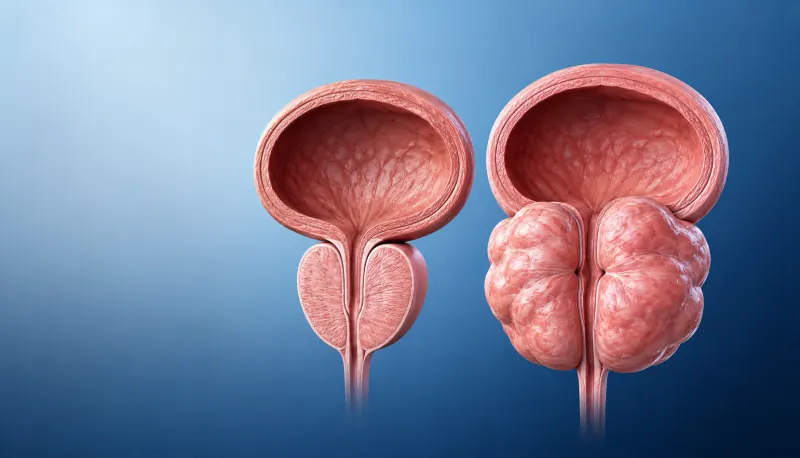
What is Rezum Therapy?
Rezum Therapy is a minimally invasive treatment for men with benign prostatic hyperplasia (BPH), commonly known as an enlarged prostate. The procedure uses sterile water vapour (steam) to destroy excess prostate tissue that is blocking the flow of urine. Over the following weeks, the body naturally absorbs the treated tissue, helping to relieve urinary symptoms and improve urine flow. It is designed for selected men and is not suitable for every patient.
Who may benefit from Rezum?
Rezum may be considered for men who have:
- Frequent urination, especially at night
- Difficulty starting urination
- A weak urine stream
- A sensation of incomplete bladder emptying
- Moderate to severe lower urinary tract symptoms caused by BPH
According to NICE guidance, Rezum is generally considered for men with moderate to severe symptoms and a prostate volume of approximately 30–80 mL (cm³). Individual suitability depends on clinical assessment, imaging, symptom severity, and patient preferences.
How does Rezum work?
During the procedure, a specialised device delivers small, controlled injections of sterile steam into the enlarged prostate tissue. The heat released by the water vapour damages the targeted cells while aiming to preserve surrounding structures. Over time, the treated tissue shrinks as the body removes it naturally, reducing obstruction to urine flow.
What are the advantages?
For appropriately selected patients, Rezum offers several potential benefits:
- Minimally invasive procedure
- Usually performed as a day-care treatment
- No surgical incision
- Improvement in urinary symptoms and quality of life
- Low reported rates of long-term erectile dysfunction in published studies
- Preservation of ejaculatory function may be possible in many patients, although this cannot be guaranteed for every individual.
Is Rezum better than HoLEP or TURP?
There is no single "best" treatment for every man with an enlarged prostate.
- Rezum is a minimally invasive option for selected men who wish to avoid more invasive surgery and who meet the appropriate clinical criteria.
- HoLEP (Holmium Laser Enucleation of the Prostate) is an effective surgical option that can treat prostates of a wide range of sizes and is often preferred for larger glands.
- TURP (Transurethral Resection of the Prostate) remains an established surgical treatment for BPH.
Current evidence does not directly compare Rezum with HoLEP or TURP in large randomized trials. Treatment choice should be individualized after discussion with a urologist, considering prostate size, symptom severity, medical history, and patient priorities
Recovery after Rezum
Most men return home on the same day. Temporary urinary symptoms, including burning during urination, urinary frequency, urgency, or mild blood in the urine, can occur during recovery. Some patients require a temporary urinary catheter after the procedure. Symptom improvement is usually gradual over several weeks rather than immediate. Recovery varies from person to person.
When should you consult a urologist?
You should seek evaluation if you have:
- Persistent difficulty passing urine
- Repeated urinary tract infections
- Blood in the urine
- Sudden inability to pass urine
- Urinary symptoms affecting sleep or quality of life
An enlarged prostate is a common condition, but similar symptoms can also occur with other urinary tract disorders. A proper assessment is essential before deciding on treatment.
Key Takeaway
Rezum Therapy is an evidence-supported, minimally invasive treatment option for carefully selected men with symptomatic benign prostatic hyperplasia (BPH). It is not suitable for every patient, and choosing between Rezum, HoLEP, TURP, medication, or other treatments should be based on a detailed consultation with a qualified urologist and shared decision-making.
About Dr. Manmeet Singh
Dr. Manmeet Singh is the Director – Urology, Robotics & Kidney Transplant at Medanta Hospital, Lucknow. He manages a broad range of urological conditions, including enlarged prostate (BPH), kidney stones, urinary disorders, robotic urological surgery, uro-oncology, and kidney transplantation.
Website: www.urologybymanmeet.com