
Kidney Stone Recurrence After Surgery: Expert Tips to Prevent It
Many people believe that once a kidney stone has been removed through laser treatment or surgery, the problem is gone forever. Unfortunately, that’s not always true. Kidney stones have a tendency to recur, especially if the underlying cause isn’t identified and managed.
Studies show that nearly 50% of patients may develop another kidney stone within five years if preventive measures are not followed. The good news is that recurrence can often be significantly reduced with the right lifestyle changes, medical evaluation, and regular follow-up.
If you’ve undergone kidney stone surgery and want to avoid another painful episode, understanding why stones recur is the first step. Dr. Manmeet Singh, a leading urologist in Lucknow with over 20 years of experience in advanced urology, robotic surgery, and kidney transplantation, helps patients not only remove kidney stones but also prevent them from returning through personalized treatment plans.
Why Do Kidney Stones Come Back After Surgery?
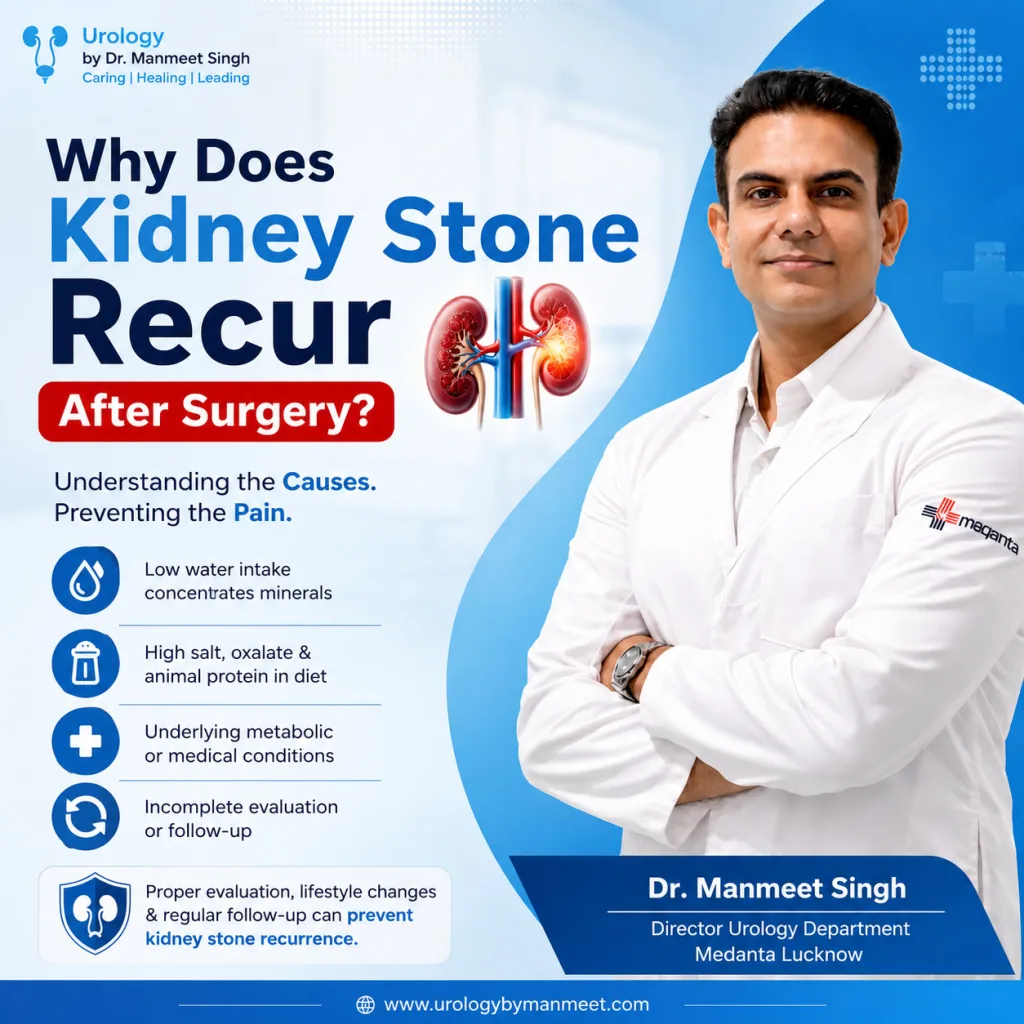
Surgery removes the existing kidney stone, but it does not change the body’s tendency to form new stones. Unless the reason behind stone formation is identified, another stone can develop months or even years later.
Common causes of kidney stone recurrence include:
- Drinking too little water
- High salt intake
- Diet rich in animal protein
- Excess consumption of oxalate-rich foods
- Family history of kidney stones
- Obesity and metabolic disorders
- Recurrent urinary tract infections
- Certain medications
- Hormonal disorders such as hyperparathyroidism
This is why follow-up care after surgery is just as important as the procedure itself.
Signs That a Kidney Stone May Be Returning
Kidney stones often begin silently. Small stones may not cause symptoms until they grow larger or start moving through the urinary tract.
Watch for symptoms such as:
- Sharp pain in the back, side, or lower abdomen
- Blood in the urine
- Burning sensation while passing urine
- Frequent urge to urinate
- Nausea or vomiting
- Fever with chills (especially if an infection is present)
- Difficulty passing urine
If you notice any of these symptoms after previous kidney stone treatment, consult a urologist without delay.
How Can You Prevent Kidney Stone Recurrence?
Preventing kidney stones requires a combination of lifestyle modifications and medical guidance. The recommendations may vary depending on the type of stone you had.
Stay Well Hydrated
The simplest and most effective way to reduce recurrence is to drink enough water. Aim to produce at least 2 to 2.5 litres of urine every day. Water helps dilute minerals that can otherwise form stones.
Reduce Salt Intake
A diet high in sodium increases calcium levels in the urine, making stone formation more likely. Limiting processed foods, packaged snacks, and excess table salt can help reduce the risk.
Follow a Balanced Diet
Many people mistakenly stop consuming calcium after developing kidney stones. In reality, a normal dietary calcium intake is often beneficial. Depending on your stone type, your doctor may advise reducing foods high in oxalates, limiting excessive animal protein, and avoiding sugary drinks.
Maintain a Healthy Weight
Obesity and metabolic syndrome increase the likelihood of kidney stone formation. Regular exercise and healthy eating habits contribute to long-term prevention.
Undergo Metabolic Evaluation
If you have had recurrent kidney stones, your urologist may recommend blood tests, urine tests, stone analysis, or a 24-hour urine study to determine why stones are forming. Identifying the exact cause allows treatment to be tailored to your needs.
Attend Regular Follow-Up Appointments
Periodic ultrasound scans or other imaging studies can detect small stones before they become large enough to cause severe pain or require surgery.
Why Choose Dr. Manmeet Singh for Kidney Stone Treatment in Lucknow?
Choosing an experienced urologist is essential not only for successful stone removal but also for preventing recurrence.
Dr. Manmeet Singh has more than two decades of experience in managing simple and complex kidney stone disease. As Director of Urology, Robotics and Kidney Transplant at Medanta Lucknow, he specializes in minimally invasive and laser-based procedures that offer faster recovery with less pain and smaller incisions.
Patients appreciate his comprehensive approach, which focuses on identifying the root cause of stone formation, educating patients about prevention, and providing long-term follow-up care.
People from Gomti Nagar, Hazratganj, Indira Nagar, Aliganj, Jankipuram, Alambagh, Mahanagar, and across Lucknow consult Dr. Manmeet Singh for advanced urological care.
Advanced Treatments for Kidney Stones
Modern technology has transformed kidney stone treatment, making procedures safer and less invasive than ever before.
Dr. Manmeet Singh offers advanced treatment options including:
- Laser kidney stone surgery
- Flexible ureteroscopy (RIRS)
- Percutaneous nephrolithotomy (PCNL)
- Mini-PCNL
- Endourological procedures
- Minimally invasive stone removal
The appropriate treatment depends on the size, location, and composition of the stone, as well as the patient’s overall health.
Other Urological Conditions Treated
Apart from kidney stone treatment in Lucknow, Dr. Manmeet Singh also treats:
- Enlarged prostate (BPH)
- Urinary tract infections (UTIs)
- Bladder stones
- Bladder disorders
- Male infertility
- Kidney transplant conditions
- Urological cancers
- Robotic urological surgery
Whether you are searching for the best urologist near me, top urologist in Lucknow, or a trusted urology specialist in Lucknow, seeking timely medical advice can prevent complications and improve outcomes.
Patient-Centred Care You Can Trust
Every patient is different, and so is every kidney stone. Rather than offering a one-size-fits-all approach, Dr. Manmeet Singh develops individualized treatment and prevention plans based on each patient’s medical history, lifestyle, and risk factors.
Clear communication, evidence-based treatment, and long-term prevention remain the foundation of his approach to urological care.